
Analytics
 http://commons.wikimedia.org/wiki/File:DARPA_Big_Data.jpg
When looking at the future of education there has been a lot of talk about analytics and what role they will play in how students learn. Many think of analytics as nothing more than statistics that are collected to provide some basic information to administration. This is not the case and we will look at analytics and what role they will play in transforming the future of learning for students.
Analytics is when data is taken and analyzed so it can be used in a meaningful
way. An example of this would be a company like dreambox.com. Dreambox uses an intelligent adaptive engine in teaching math to students so in addition to marking a question right or wrong, they collect data on how long it took to answer a question, how they answered the question and the structure they used. All of this information is compiled and analyzed. From this, a decision is made whether the student has mastered the concept or not. If they have not mastered the topic, then it is retaught in a different way until the student understands the material and moves on to the next topic. This is an example of using analyzed data in a meaningful way.
Analytics is when data is taken and analyzed so it can be used in a meaningful
way. An example of this would be a company like dreambox.com. Dreambox uses an intelligent adaptive engine in teaching math to students so in addition to marking a question right or wrong, they collect data on how long it took to answer a question, how they answered the question and the structure they used. All of this information is compiled and analyzed. From this, a decision is made whether the student has mastered the concept or not. If they have not mastered the topic, then it is retaught in a different way until the student understands the material and moves on to the next topic. This is an example of using analyzed data in a meaningful way.
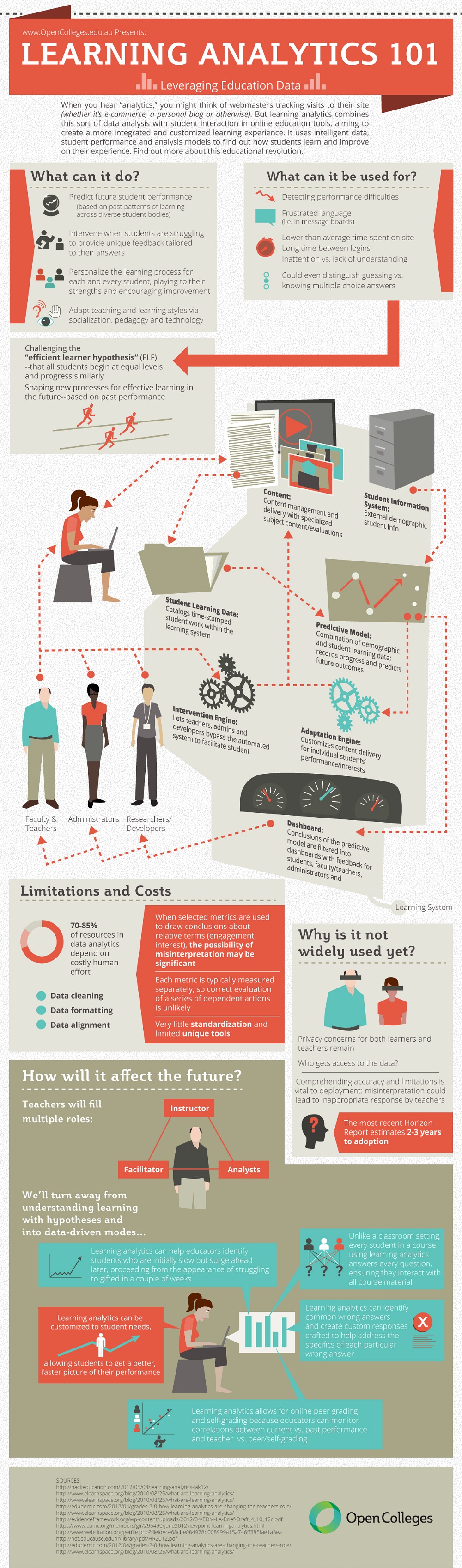
Analytics in Education Analytics is still in the early stages of use and many of the ideas are nothing more than concepts at this point. Here are some of the ideas of possible uses for analytics:
Concerns about Analytics Although analytics are seen as very useful to education, some major concerns exist that need to be addressed before it will be widely accepted. They are:
|
Analytics and Cloud Memory Although the topic of analytics in education is an interesting topic, what does it have to do with cloud memory? Cloud computing provides the best and cheapest infrastructure from which to process all the data that analytics requires. Cloud memory is going to be one of the main sources from which information/data will be drawn from for use by analytics. All of our data that is stored online is nothing but data that can be searched, analyzed and cross referenced to provide us with a meaningful result. For this reason cloud memory will always be linked together with analytics.
Big Data For further information on this topic click on this link.
Discussion Question 1 In what ways do you see learning analytics combined with cloud memory being used in education? Do you foresee problems or issues? How about the benefits? To answer click here.
|
Conclusion
Many of the concerns about analytics arise from the idea that it will replace teachers and create an education system that is solely reliant on superficial data. We believe that analytics will play an important part in the future of education, but only as one tool that teachers use on a daily basis to teach students. For this reason, we see a benefit from continued research and development of analytics, but understanding the role it will play will be important moving forward.
 Retrieved from http://www.learningfrontiers.eu/?q=story/will-analytics-transform-education
References:
http://commons.wikimedia.org. (2013, 04 20). Retrieved 10 26, 2013, from Wikipedia Commons: http://commons.wikimedia.org/wiki/File:DARPA_Big_Data.jpg
Bishop, T. (2013, 04 09). GeekWire Radio: How data, technology and analytics are reshaping education. Retrieved 10 26, 2013, from GeekWire: http://www.geekwire.com/2013/geekwire-radio-data-technology-reshaping-education/
Yuan, L. (n.d.). Will Analytics Transform Education? Retrieved 10 26, 2013, from Learning Frontiers: http://www.learningfrontiers.eu/?q=story/will-analytics-transform-education
http://commons.wikimedia.org. (2013, 04 20). Retrieved 10 26, 2013, from Wikipedia Commons: http://commons.wikimedia.org/wiki/File:DARPA_Big_Data.jpg
Bishop, T. (2013, 04 09). GeekWire Radio: How data, technology and analytics are reshaping education. Retrieved 10 26, 2013, from GeekWire: http://www.geekwire.com/2013/geekwire-radio-data-technology-reshaping-education/
Yuan, L. (n.d.). Will Analytics Transform Education? Retrieved 10 26, 2013, from Learning Frontiers: http://www.learningfrontiers.eu/?q=story/will-analytics-transform-education
